Newsletter Subscribe
Enter your email address below and subscribe to our newsletter
Enter your email address below and subscribe to our newsletter

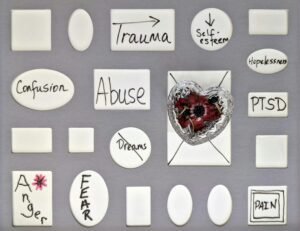
Yes, trauma is real. It is not a weakness, it is not you being “too sensitive.” It is not something you simply wake up one day and decide to be done with. Trauma is what happens inside your body and mind when something painful or a long string of painful things becomes too much for you to process at the time. And because you couldn’t process it then, it stays, it waits, and it quietly shapes everything that comes after.
And this is what most people miss: trauma’s loudest damage is rarely done in the moment it happens. It is done in the years that follow, in the way you love, the way you trust, the way you feel about yourself when nobody is watching.
I would like to re-echo that trauma is not the event. It is the wound the event left behind.
It can come from things the world easily recognises as painful; loss, violence, abuse, accidents. But it can also come from quieter things that the world doesn’t always take seriously. A childhood where you had to earn love, a home where no one talked about feelings, years of being told, in words or in silence, that you were too much, or never quite enough. A friendship that vanished without explanation or a relationship that made you feel small for so long that small started to feel normal.
Trauma does not compare itself. It does not say “well, what happened to you wasn’t as bad as what happened to someone else, so you have no right to hurt.” Your nervous system, the part of your body that manages threat and safety, does not grade pain on a scale. If something was too much for you to carry, it was too much, full stop.
What trauma does is teach your body to stay on guard. Long after the danger has passed, some part of you is still watching the door, still bracing, still waiting for things to go wrong. Not because you are broken, but because your mind learned, very sensibly at the time, that staying alert kept you safe.
The healing begins when you learn that you no longer need that armour everywhere you go
Relationships ask something very specific of us; They ask us to be seen, to trust someone with our real selves and believe they will handle us with care. That is a beautiful thing and for someone carrying trauma, it can also be the most terrifying thing in the world.
Because trauma teaches a different lesson about people. It teaches that love comes and goes, that people leave, that showing your true self is a risk that doesn’t always pay off. So without even realising it, you begin to protect yourself and those protective habits, as loving as their intention was, begin to quietly work against you.
Some people respond by pulling away first; ending things, going cold, creating distance before the other person gets a chance to leave. It doesn’t come from not caring. It comes from caring so deeply that the thought of being left is unbearable. Walking away feels safer than waiting to be walked out on. If you have ever done this, it doesn’t mean you are commitment-phobic or emotionally unavailable. It means you learned very early that leaving hurt less than being left, and your heart has been running that same programme ever since. The good news is: programmes can be rewritten or rather overwritten.
Some people do the opposite, they stay in relationships long past the point of health, because chaos and inconsistency feel familiar. If your earliest experiences of love were unpredictable, warm one moment, cold the next then a relationship that is stable and kind can actually feel strange. Not because stability is wrong, but because your nervous system never learned what it felt like to be safe. Recognising this is not a condemnation of your choices. It is a doorway. Because once you see the pattern, you can begin to choose differently.
Some people stop asking for what they need altogether. If your needs were once dismissed, mocked, or treated as a burden, you learned to keep them small. You became fluent in “I’m fine” even when you were not fine at all. You waited to be seen instead of speaking up and then felt quietly devastated when nobody saw you. This is one of the most common and most painful ways trauma works in relationships: it silences you, and then makes you feel invisible, even when the people around you genuinely want to reach you.
And sometimes trauma makes you distrust the very things you’ve been longing for. A partner who is consistently kind starts to feel suspicious. Genuine love triggers anxiety instead of peace. You find yourself waiting for the other shoe to drop so you test, withdraw, or self-sabotage, and then wonder why good things never seem to last. They didn’t leave because you were unlovable. They became exhausted by a war you were fighting alone, one they couldn’t see, one you didn’t yet have the words to explain.
The reality is that friendships carry their own quiet bruises. Trauma often makes you one of the most attentive, loyal, deeply empathetic friends a person could have. You notice the shift in someone’s voice. You show up without being asked. You understand grief and pain and complexity in ways that others who haven’t been through the fire sometimes cannot. These are not small things. These are gifts, and they came from you.
But trauma also brings its complications into friendship. It can make you hypervigilant about whether people truly like you. A message left on read becomes proof of rejection. A friend’s distracted tone becomes evidence that you’ve done something wrong. You replay conversations looking for the moment you said too much, took up too much space, needed too much. This kind of anxiety is exhausting, for you most of all. What it needs is not more self-monitoring. It needs reassurance from within: I am allowed to take up space. I am allowed to be a person who sometimes needs things.
Trauma can also push you toward isolation. Not because you don’t love your people, but because showing up, truly showing up, present and open, can feel like more than your depleted self can manage. So you cancel, you go quiet, you disappear for stretches, then feel ashamed of the disappearing. The shame then makes it harder to return. If this is you, please hear this: your friends miss you, not a version of you that has it all together. Reaching out after a long silence is never as catastrophic as it feels. A simple “I’ve been struggling, but I’m here” has repaired more friendships than people realise.
And trauma can make it agonisingly hard to receive love. Compliments bounce off you. When someone goes out of their way for you, you feel guilty rather than grateful because somewhere deep inside, you have not yet fully believed that you are worth the effort. Practise receiving. Let people be kind to you. It will feel uncomfortable at first but do it anyway. Every time you receive love without deflecting it, you are teaching your nervous system something new: good things are allowed to reach me.
Healing from trauma is not about forgetting or erasing what happened. It is not about becoming someone who was never hurt.
It is about arriving, slowly and with great grace and compassion toward yourself, at a place where the past no longer makes your decisions for you.
It is about learning to pause in the middle of a familiar pattern and say I see what is happening here. This is the old story. But I am not in that place anymore. I am here, now, and I am safe.
It is about building your life around people and spaces where you are allowed to be fully human, messy, healing, imperfect, and still completely worthy of love as God has unconditionally done and been to all of us.
This is just to say that healing happens in relationships. Which is the cruelest irony because the very thing trauma damages is the very thing that repairs it.Things like trusting people, being vulnerable, staying when everything in you wants to run, are the very things that heal trauma. For a traumatized person to heal, you need safe relationships, honest friendships, spaces where you are met with patience instead of judgment. A good therapist, if you can access one. A community that holds you without conditions.
You do not need to do this all at once. You do not need to have it figured out before you begin. You simply need to take one small step toward the life you deserve, and then another, and then another.
You are not too much. You are not broken beyond repair. You are not the sum of everything that hurt you.
You are rather someone who survived things that were genuinely hard and you are still here, still trying, still reaching toward connection even when it frightens you. That is not weakness. That is one of the most courageous things a human being can do.
The wound is real but so is the healing.
You are allowed to get better. You are allowed to be loved. You are allowed to feel safe, not just occasionally, not just when you’ve earned it, but as a quiet, steady, ordinary part of your everyday life.
That life is possible, and it begins the moment you decide you are worth it.
Stay Blessed.