Newsletter Subscribe
Enter your email address below and subscribe to our newsletter


Your pain is not proof that Christianity does not work. It is proof that some of us are still early in letting it work on us.

Five years ago, I started writing WiGTyT Articles because I needed a place to reflect deeply and honestly on who God had been to me through ordinary days and difficult months.
That was really all it was at the start: not a platform or a project, but just me at the end of another day, trying to put language to what I had noticed of God’s character in the middle of everyday life, including His patience, His timing, and His refusal to leave me exactly as He found me.
There was also a season when I felt genuinely misunderstood, when what I carried had nowhere honest to land. Writing became the place I brought that. I did not write to be validated, but to process it faithfully in His presence on the page, where I could tell the truth without needing anyone’s agreement first.
I did not know back then that the page would become a place where other people would stand too. Five years later, there is a reader on the other side of these words who reads, nods, winces, and sometimes writes back to say, “Me too.”
If you have been here for any part of these five years, I want you to know something plainly. Walking this reflection out loud, month after month, has shaped me more than I expected. Thank you for being part of that.
That is why this month feels different. Instead of writing to you the way I usually do, I want to write with you, looking back with gratitude and looking honestly at where we are.
There is something that has been sitting on my chest lately, and I suspect it has been sitting on yours too, even if you have not said it out loud.
When you look honestly at how many of us who call ourselves born again actually live, including the gossip we justify as discernment, the backstabbing we excuse as just being real, the disobedience we wear like it is edgy, and the disrespect we hand out and call boundaries, you have to ask a hard question: Do we actually fear God?
Do we not just believe in Him or know about Him, but truly fear Him? Do we carry that deep, reverent, sobering awareness that we are seen, that our lives are not our own, and that grace was never meant to be a loophole?
I want to be careful here, because it would be easy for a question like that to turn into a stone thrown at Christians today, as if I am standing somewhere outside the group I am describing. Honestly, I am not. This was a mirror before it became a message. I have caught myself in every one of those postures at some point, treating my salvation like a certificate I framed once and never looked at again, instead of a daily, costly, ongoing surrender.
Naming a wound honestly is not the same as condemning the person carrying it. So let us just say it plainly and gently together: something has gone loose in how our generation holds our faith. We have inherited or built a version of grace that got unbolted from its cost. Somewhere along the way, “once saved” quietly became “so it does not matter,” and nobody ever agreed to that. It just crept in, silently and cleverly.
Remember, salvation is deeply personal. Nobody gets born again by association. Your parents’ faith does not cover you, your church attendance does not cover you, and being in the group chat with the right kind of Christians does not cover you. It was always going to be you and God, one-on-one, through a real surrender met by a real transformation that is evidently seen in your daily walk.
Here is the part we conveniently forget to mention in the same breath: if salvation is individual, then so is the responsibility that comes after it.
We do not get to claim the personal nature of grace and then outsource the personal nature of growth. You cannot say your faith is between you and God, and then act as though maturity, accountability, and obedience are optional extras that the community owes you or that time will hand you automatically.
Growth was never going to happen to us; it happens through us. It comes through the daily, unglamorous decisions to let the Word confront the parts of us we would rather protect. I have learned that maturity is not a birthday you wake up to. It is a floor you build, one obedient choice at a time, often when no one is watching and there is no audience to perform for.
This is the exact freedom Paul was so careful to protect from itself. We were called to freedom, but not freedom as an excuse. We were given freedom to serve, grow, and love well, which means freedom for responsibility rather than freedom from it.
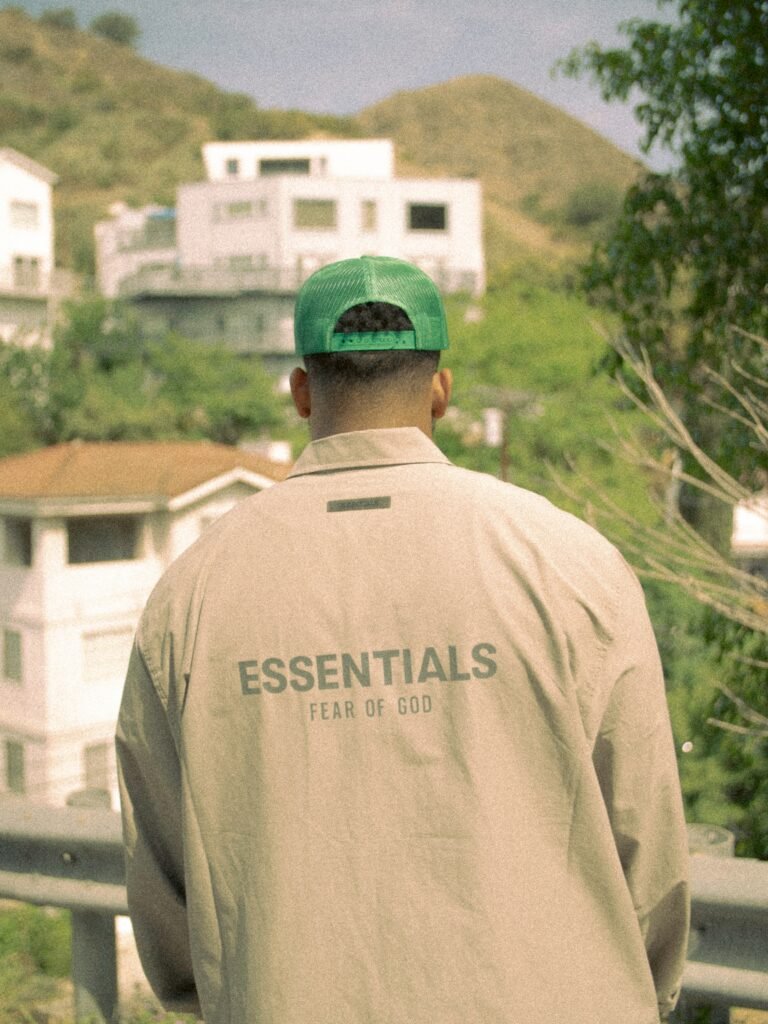
I think we have let the fear of God become an old, uncomfortable phrase we tiptoe around, as if it belongs to a harsher, more legalistic era of faith. But fearing God was never meant to make us small. It was meant to make us honest.
It is the thing that makes you pause before you speak about someone behind their back. It is the thing that makes obedience feel less like a rule and more like trust. It is the quiet, steadying awareness that Someone who loves you is also paying attention, and that this is a comfort, not a threat.
A generation that walks in the fear of God is not a generation walking around anxious. It is a generation walking around awake.
It means being awake enough to catch certain thoughts before they leave your heart and mouth, awake enough to choose obedience over convenience, and awake enough to treat other people, especially the ones in your own church pews, with the dignity you want extended to yourself. Jesus called this the golden rule of thumb in Luke 6:31 when He said to ask yourself what you want people to do for you, and then grab the initiative and do it for them.
That kind of reverent fear does not shrink you; it restores you. It hands you back a self that is not constantly managing an image, justifying pettiness, or negotiating with conviction. Honestly, it is the most peaceful way I have ever found to live.
If you are reading this and recognize yourself in the wound more than the hope right now, if you have been the one gossiped about, backstabbed, or disrespected by people who share your faith, I want to say this directly to you: your pain is not proof that Christianity does not work. It is proof that some of us are still early in letting it work on us.
Please do not let someone else’s immaturity talk you out of your own conviction, nor let their harshness harden your heart. You do not have to carry their choices. Let their shortcomings simply remind you of how sweet real, gentle grace truly is, and let it make you determined to be a safe, soft place for others.
And if you recognize yourself in the other half, whether in the gossip, the coldness, or the casual disobedience, hear this without a single drop of shame. Shame never grew anyone, and God is not in the business of holding your past over your head. It is never too late to take your growth seriously, and you do not need to perform a grand comeback to start over.
The heart of God is always open, patient, and ready to meet you right where you are, gently helping you rebuild.
When I started writing five years ago, I thought I was just keeping a private journal out loud. I never expected to find a community of grace-filled souls walking alongside me, page after page, month after month. That has been the real gift of WiGTyT. It wasn’t just that I found my voice, but that together, we kept finding Him, the God who sees every hidden corner of our hearts and loves us completely anyway.
We are all a work in progress, and none of us have arrived. But there is so much beauty in the becoming. Take a deep breath today, release the weight of where you have failed or been failed, and rest in the truth that His grace is quiet enough to heal you and strong enough to carry you forward.
We are still becoming, and the God who began this good work in us is far too faithful to leave us unfinished.
Stay Blessed.