Newsletter Subscribe
Enter your email address below and subscribe to our newsletter

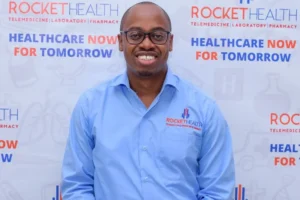
I believe most of Ugandans grew up without a ‘family doctor’. Not without healthcare entirely, but without the particular reassurance of a doctor who knew our name, our history, our mother’s or father’s number in case things got serious. That is a privilege reserved for the few. For the rest of us, illness meant guessing, asking around, hoping the queue at the clinic wasn’t too long, hoping the person behind the counter knew what they were doing, hoping the medicine on the shelf hadn’t run out before it was our turn.
There is a particular kind of fear that arrives at night, in the absence of that doctor we never had. A child’s temperature climbing past what feels safe. A parent doubled over in a way that wasn’t there yesterday. The clock reading 11:00pm or 2:00am and Kampala outside the window gone quiet in that way the city never quite trusts.
For a long time, that fear had nowhere to go until morning. You waited, hoped, measured the hours against how bad things felt, and you made a judgment call that no one should have to make alone, at that hour, without a single medically trained voice to lean on.
Somewhere along the way, that changed. Not with noise, or with a ribbon-cutting the whole country watched. It changed with a number. Dial *280#, or call a toll-free line, and somewhere on the other end a doctor picks up. Not tomorrow or after a boda ride and a queue and a stranger’s guess at what’s wrong. Like now!!!
This is what Rocket Health has quietly built since 2012, and it is worth pausing to actually see it, because we are very good in this country at absorbing conveniences without naming the labour behind them.
Practically speaking, here is what changed. A mother in Gayaza or Kira no longer has to choose between her child’s fever and the cost, time, and risk of a trip to a clinic she isn’t sure will even have the right medicine in stock. A young person can ask a doctor a question about their own body without the weight of a waiting room full of familiar faces. A person managing a chronic illness, the kind that needs steady attention rather than dramatic intervention, can get a prescription delivered instead of spending a working day chasing one down. And honestly none of this is small. Distance has always been one of the quiet killers in Ugandan healthcare, not because people don’t care, but because care that is far away might as well not exist when someone is suffering right now.
What Rocket Health did was shorten that distance to the length of a phone call, and in doing so, gave many of us something close to what a family doctor once meant. A twenty-four hour contact centre staffed by people trained to take a voice full of fear seriously. A pharmacy that comes to you rather than the other way round. A laboratory that sends someone to your door instead of asking you to carry your own worry across town. It is not flashy work. It is not the kind of thing that trends. It is the kind of work that only announces itself in the absence of the crisis it prevented, in the illness caught early, in the night that didn’t end in an emergency room, in the fear that got answered before it could grow into something worse.
There is something almost sacred about being reachable at the hour when people are most afraid. Anyone who has sat with a sick child through the small hours knows that what you want most, more than medicine even, is simply someone who knows more than you do, telling you it will be alright, or telling you honestly that it won’t be, and what to do next. To build a system, deliberately and for years, whose entire purpose is to be that voice for a stranger, at any time, for a fee most people can actually afford, is a kind of quiet devotion that deserves to be named as such.
So this is a small thank you, offered in a country that rarely stops to say it. To the founders who looked at long queues and empty shelves and decided the answer was to build rather than complain. To the doctors on the other end of that toll-free line who have talked frightened strangers through frightened nights, more times than any of us will ever know. To the riders and lab technicians who move through Kampala’s traffic carrying someone else’s relief in a small package. To everyone who has made “healthcare now” something more than a slogan for the people who needed it to be true.
We take for granted, so easily, the things that simply work. May we get better, in this country and in this life, at naming the hands behind our ordinary mercies before we lose them, and not only after.
Many never had a family doctor but we have Rocket Health, and for many of the Ugandans, that has been enough.
For My God and My Country!