Newsletter Subscribe
Enter your email address below and subscribe to our newsletter

What a simple board game can teach us about faith, wisdom and the journey with God
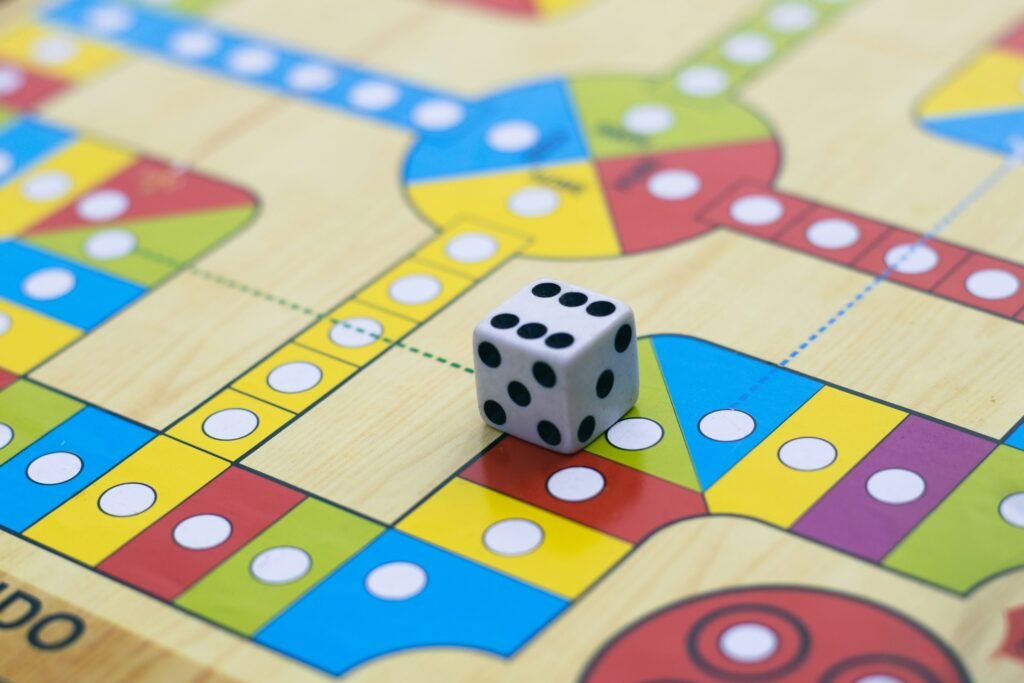
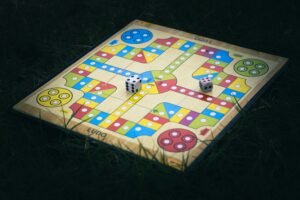
I have been playing a lot of Ludo lately; perhaps a little too much.
You know how it goes. Someone brings out the board on a slow Sunday afternoon, and within twenty minutes the whole living room has turned into a courtroom. “That wasn’t a six.” “You moved before you rolled.” “I was this close to home and you had to land on me?” There is nothing quite like Ludo for revealing who in your family is a sore loser and who quietly plots revenge for the next round. Lucky for me, I have been playing it on my phone.
But somewhere between the arguing and the laughing, you start noticing something. Four little pieces moving around a board, waiting for the right number, watching your opponent’s next move, celebrating a lucky roll, and every so often, feeling that very specific ache of watching a piece you carefully guided halfway across the board get sent all the way back home in one shot.
It’s a game of chance, strategy, patience and timing. And the more I played, the more it started to feel like it was quietly narrating something about life.
Now, life is not a game. It carries far too much weight for that; people, relationships, callings, seasons, eternity. But sometimes the most ordinary things hand us language for the extraordinary. A board game with dice and plastic pieces ends up saying something true about faith.
So this is why I’m calling it the Ludo theology of life. Not a theology of dice, but a theology of movement. Because maybe the real question isn’t “Where am I going?” Maybe it’s simpler and harder than that: Am I willing to move?
And these are some of the lessons that I have been able to craft from my experience with this “theology”:
You cannot win from home
Every piece starts at home. It’s the safest square on the board. Nothing touches you there. Nobody sends you backward. You’re completely protected from everything the journey could throw at you. But home has one problem: you cannot make progress there.
At some point, you have to step out. And the moment you do, you become exposed. Someone might capture you, you might lose ground, the journey might turn out to be far harder than you expected. And yet there’s no other way to actually get anywhere.
This is one of the oldest tensions in life; we want the destination, but we’d rather skip the vulnerability it takes to get there. We want growth without discomfort, influence without exposure, maturity without being stretched, faith without a single uncertain moment. We want the promise, minus the process. But there are places in life where safety and progress simply cannot share the same square.
Abraham never discovers what God prepared for him without leaving what was familiar. Peter never walks on water while he’s still safely gripping the boat. Israel never reaches the Promised Land without first crossing a wilderness that made no sense at the time. There comes a moment when life requires an actual move. So maybe the real question isn’t whether God has called you to accomplish certain things in life. Maybe it’s whether you’re still sitting at home because home simply feels safer; and the truth is that you cannot win from home.
The dice determines the opportunity, but not the decision
This is something every Ludo player learns fast: you don’t control what number shows up. You roll, and then you respond. The dice hands you a possibility. It doesn’t make the decision for you, and life runs on the same principle, and honestly, it’s a relief once you see it.
You didn’t choose where you were born, what family you grew up in, or half the things that have happened to you this year. You don’t control what other people do, what opportunities show up or don’t, what delays or disappointments land in your lap. But you still get to decide what you do with whatever lands in front of you.
The circumstance isn’t always your choice. The response always is.
Put two people through the same setback and watch what happens. One gets bitter, the other gets wiser. One shuts down, the other rebuilds. One blames God, the other somehow finds Him in the middle of it.
Spiritual maturity was never really about getting better circumstances. It’s about becoming the kind of person who responds well to whatever circumstances actually show up. The dice falls differently for everyone. But you still have a move to make.
Not every move that is possible is wise
Ludo will often hand you several options at once: move the piece closest to home, set up a strategic block, take a risk and expose yourself for a bigger gain, protect what’s vulnerable or go in for the capture. The number tells you what’s possible. It never tells you what’s wise. That’s a completely different skill, and it’s called discernment.
There’s a long list of things we’re technically allowed to do. That was never the same as things we should do. You can reply to every message the moment it comes in, say yes to every invitation, chase every opportunity that looks shiny, say every thought out loud the second you think it, walk through every open door just because it’s open. But wisdom keeps asking a quieter, more inconvenient question: Is this actually my move? Not “Can I?” but “Should I?” Not “Is the door open?” but “Is this the door You actually want me walking through?”
Life was never mainly about having options. It’s about knowing which option is worth your obedience.
Sometimes waiting is the move
Anyone who’s played Ludo knows this specific flavor of frustration: you know exactly what number you need. You can already see the move in your head. You know precisely what you’d do the second the dice cooperates. But you can’t force it so you wait, you wait again, and sometimes you wait a little longer than feels fair.
Life has entire seasons that feel exactly like this. You’ve prayed, prepared. You’ve done everything you know how to do. And still, nothing seems to be moving on the board.
We tend to treat waiting like it’s the same as doing nothing. But waiting can be its own quiet act of faith. A farmer isn’t idle while a seed grows underground where nobody can see it. Someone trusting God for an answer that hasn’t come yet isn’t wasting time either.
Sometimes God is doing something in us while we’re still waiting for Him to do something for us.
David gets anointed king, then spends years running through wilderness and caves before he ever sits on a throne. Joseph gets a dream about his future, then survives a pit and a prison first. Jesus spends decades in a carpenter’s workshop before anyone ever calls Him Savior
The waiting season was never wasted time. More often, it’s where our character finally catches up to our calling.
The board requires attention
You cannot play Ludo well while staring only at your own pieces or any other distractions. You have to read the whole board; Where’s your opponent sitting? How close are they to your position? Which of your pieces are exposed right now? What does your current spot actually mean for your next move?
The game rewards people who pay attention. So does life, if we’re honest.
Some of us keep asking God for direction while completely ignoring what’s already unfolding around us. We pray for wisdom but refuse to actually observe anything. We ask for discernment but keep waving away the pattern that’s repeated itself four times this year already. We want to know God’s will but never slow down long enough to notice what He may have already been showing us.
Attention is its own spiritual discipline. Sometimes God speaks through Scripture. Sometimes through a friend who says the thing you didn’t want to hear. Sometimes through circumstance, consequence, or that pattern you keep explaining away instead of examining. We need more than prayer. We need awareness.
Before the wise person asks “What should I do?” they first ask, “What am I actually seeing right now?”
Progress does not make you invincible
There’s a specific kind of heartbreak in Ludo where you watch a piece travel almost the entire board, only for someone to land on it and send it all the way back home in one move. All that progress gone or at least it feels gone.
But here’s what’s actually true: you didn’t lose the experience of the journey. You know the board better now. You know exactly which square burned you and why. You understand the game differently than you did an hour ago.
A setback can take your position without taking your growth. You can lose the job and still keep everything it taught you. You can watch a relationship end and still walk away wiser than you went in. A plan can fall apart completely while your character quietly gets stronger underneath it all. You can be delayed without being destroyed. Sometimes God allows us to lose ground without losing purpose. Being sent back is not the same thing as being finished. There is grace for starting again; real grace, not the polite kind.
You need courage to leave the safe position
Sometimes the safest-looking move on the board isn’t actually the best one. You can see danger coming. You could just stay put and hope it passes you by, or you could make the move that exposes you a little, because it’s the one that actually opens up progress.
Life asks the same thing of us more often than we’d like. Not foolishness or recklessness but courage.
Faith was never the absence of risk. If everything came with a guarantee attached, it wouldn’t take much faith to believe it. There are moments when obedience simply means stepping into the unknown, because you trust the One who called you more than you trust your own ability to predict how things will turn out.
That’s the whole tension of faith in one sentence. You move without knowing everything. You obey without seeing everything. You trust without controlling everything. And sometimes the biggest move you’ll ever make is the uncomfortable one; precisely because it’s the one that actually requires trusting God instead of your own certainty.
Do not confuse someone else’s position with your own progress
One player is racing around the board while another is still stuck trying to roll a six just to get a single piece out. It’s easy to look over and think, they’re winning, I’m behind.
But Ludo has a funny habit of humbling that thought fast. Someone way out in front can lose a piece in the next thirty seconds. Someone stuck at home can suddenly catch a run of good rolls and pull ahead.
Life does the exact same thing to us, constantly. Someone got married earlier. Someone landed the job, the breakthrough, the calling earlier. Someone seems further ahead may be spiritually, financially, or relationally and it’s tempting to treat their timeline as a verdict on yours. But God never asked you to live someone else’s life. Comparison quietly turns another person’s journey into a judgment against your own, and that judgment was never fair or accurate to begin with.
Your assignment was never to arrive at the same time as everyone else. It was to be faithful with what’s actually in your hands. Paul put it plainly: each of us should test our own actions, not measure them against someone else’s scoreboard.
There’s real freedom in that. You don’t need to win somebody else’s game. You need to faithfully play yours.
The goal is not movement. The goal is arrival.
This might be the part where Ludo says the most about us. It’s easy to get obsessed with movement itself; moving pieces, making decisions, chasing opportunities, staying busy, calling all of it progress. But movement was never the actual goal, arrival was.
A piece can circle the entire board and still not make it home. In the same way, a person can be endlessly busy and still be moving in the wrong direction entirely. You can build a successful career and end up with an empty soul. You can grow a large platform and quietly lose your family in the process. You can become influential and lose your integrity without even noticing the trade happened. You can be busy serving God and, somewhere along the way, grow distant from Him. Movement isn’t the same as progress. Progress isn’t the same as purpose.
The real question was never “Am I moving?” It’s “Am I moving toward what God actually called me to become?” There’s a real difference between being busy and being fruitful, and most of us can feel that difference even when we don’t want to admit it.
And perhaps this is the real “theology” of Ludo
We don’t control the dice, but we’re still responsible for the move. We can’t control every circumstance life throws at us, but we get to choose how we respond to it. We can’t eliminate risk from the equation, but we can walk through it with wisdom instead of blindness. We can’t avoid every setback that’s coming, but we can refuse to stay defeated once it arrives. We can’t determine anyone else’s journey or timeline, but we can commit to faithfully walking our own without constantly glancing at theirs.
And we won’t always understand the timing, the years that felt wasted, the doors that stayed shut, the waiting that stretched longer than we thought we could bear. But we can trust the God who sees the entire board, even when all we can make out is our own small corner of it.
That might be the deepest lesson hiding in all of this. God sees the whole board while we’re only ever looking at one move. He sees the journey while we’re stuck staring at the delay. He sees the preparation happening underneath the setback we’re busy grieving. He sees what all of it is producing in us while we’re still just registering the risk. He sees what obedience is about to unlock while we’re only able to see where we’re currently standing. He already sees where we’re going, long before we do.
So maybe the invitation was never to get better at predicting the next roll. Maybe it’s simply to get better at trusting God with the board itself, knowing when to move, when to wait, when to protect what matters, when to take the risk, and when to start again after being sent all the way back to where we began.
And above everything else, to keep moving toward home. Because at the end of the game, nobody’s really going to ask how many sixes you rolled. The only question that will matter is whether you finished the journey you were actually given.
Maybe life was never about getting the perfect roll. Maybe it’s about making the most faithful move with the roll you’ve actually been handed.
Stay Blessed!